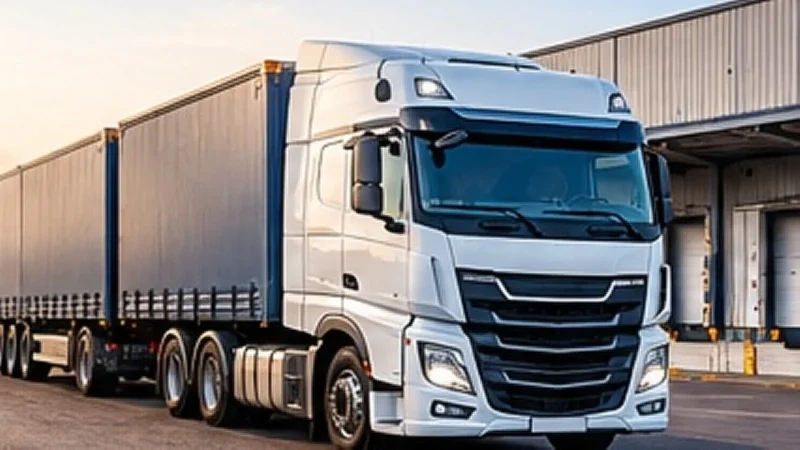

Logistics companies win tenders in South Africa by being registered and compliant before the tender appears, choosing tenders that genuinely match their fleet and lanes, and submitting complete, well-priced bids that score well on both price and the evaluation criteria. Most bids are lost on paperwork and pricing, not on trucks. Treat tendering as a repeatable system, not a once-off scramble before the closing date.
This guide is for owners and managers of trucking, freight, courier, warehousing and distribution businesses who want to bid for public-sector or corporate logistics work and win more often. It covers where tenders are published, the documents you need, how to decide which tenders to chase, how to price, and how to follow up after award or rejection. If you are earlier in the journey and looking for regular loads rather than formal tenders, start with our guide on how to get trucking contracts in South Africa.
Understand the two kinds of logistics tenders
Not all tenders work the same way, and your preparation should reflect who is buying.
- Public-sector tenders: issued by national and provincial departments, municipalities and state-owned entities. These follow formal procurement rules, standard bid documents and preferential procurement scoring. National and provincial opportunities are published on the National Treasury eTender Portal, while many municipalities and state-owned entities also publish on their own websites or portals.
- Private-sector tenders and RFQs: issued by manufacturers, mines, retailers, distributors and agricultural businesses. These are often called a request for quotation (RFQ) or request for proposal (RFP), and usually start with supplier onboarding. The rules are set by the company, so read every requirement carefully.
Many growing logistics businesses do best with a mix: private-sector contracts for steady volume and selected public-sector tenders where their fleet, location and compliance profile give them a real advantage.
Get your compliance pack ready before you need it
The fastest way to lose a tender is to discover a missing document two days before closing. Build a compliance pack once and keep it current. For most logistics tenders it includes:
- Company registration documents from the CIPC, with directors’ details that match every other document.
- Central Supplier Database (CSD) registration for public-sector work, kept active and with banking, tax and director information up to date.
- Tax compliance status from SARS, usually verified through a tax compliance status PIN or via your CSD profile.
- B-BBEE certificate or sworn affidavit, depending on the size of your business.
- Fleet list with registration numbers, vehicle types, payloads, ages and licence disc expiry dates.
- Insurance schedules, typically including goods-in-transit and public liability cover.
- Operator and driver documentation, such as operator cards and driver professional driving permits, plus any cross-border permits if the work crosses borders.
- Safety and quality evidence, such as RTMS accreditation, a health and safety file, tracking capability and incident procedures, where the buyer asks for them.
- Company profile and contactable references from current or past customers who have agreed to be named.
Requirements differ between buyers and change over time, so confirm current requirements with the relevant authority or the issuing organisation for every bid. Put an expiry date next to every document and review the pack monthly.
Find the right tenders, not every tender
Owners who bid on everything tend to submit rushed, generic bids and win very little. A simple bid/no-bid check saves time and improves your hit rate. Before committing, answer these questions honestly:
- Does the work match the vehicles we actually own or can reliably subcontract?
- Are the lanes, depots or delivery points within our operating area?
- Can we meet every mandatory requirement, including briefing sessions and returnable documents?
- Will the likely contract value be profitable after fuel, tolls, drivers, maintenance and finance costs?
- Can we absorb the payment terms without straining cash flow?
- Do we have enough time to prepare a complete, accurate bid?
If you answer no to any of the first three, walk away. If you are unsure about profitability, run the numbers first with the Truck Profit Calculator.
Read the tender document like an evaluator
Evaluators work through bids with a checklist. Your job is to make every tick easy. Read the full document twice, then build your own checklist from it.
- Administrative compliance: every returnable form completed, signed and initialled where required. In public-sector tenders these are often standard bidding documents (SBD forms).
- Mandatory requirements: compulsory briefing sessions, site visits, registrations and minimum fleet sizes. Missing one usually disqualifies the bid outright.
- Functionality criteria: experience, fleet capacity, tracking, safety record and methodology, each with a weighting and sometimes a minimum score to proceed.
- Price and preference: in public-sector tenders, price is scored together with preference points for specific goals under the preferential procurement framework. The tender document states the points system and goals that apply.
Write down the closing date, time, submission method and the name of the contact person. Send clarification questions early and in writing, and keep the answers with your bid file.
Price to win and still make money
Underpricing to win a tender is one of the most common ways logistics businesses get into trouble. A contract that loses money on every trip only gets worse as volumes grow. Build your price from real costs per kilometre or per load, then add margin.
- Variable costs: fuel, tyres, tolls, maintenance and driver trip allowances.
- Fixed costs: vehicle finance or depreciation, insurance, licensing, tracking and salaries.
- Empty running: the return leg if there is no backload.
- Waiting time and penalties: loading delays, service-level penalties and standing time.
- Escalation: check whether the contract allows fuel or annual price adjustments, and how they are calculated.
Illustrative example only: a distributor tenders for three deliveries a week between two depots. You calculate your full cost per round trip, including the empty return, then add your target margin. If the price that results is clearly above what you believe competitors will bid, look at reducing empty running (for example by finding a backload) before cutting your margin. If you still cannot get to a competitive, profitable number, it is a no-bid. To see what extra utilisation could be worth across your fleet, try the Transport Growth Calculator.
Write a bid that is easy to score
Where a tender asks for a methodology or company profile, keep it specific and structured to the evaluation criteria. Evaluators should not have to search for answers.
- Use the same headings and order as the evaluation criteria.
- Show how you will operate this specific contract: vehicles allocated, depot, shift patterns, back-up vehicles and breakdown response.
- Explain how customers will get proof of delivery, tracking updates and incident reports.
- Include only real, verifiable experience and references.
- Add an index and number every page so documents can be found quickly.
Before submitting, have someone who did not write the bid check it against your checklist. A second pair of eyes catches the unsigned page or missing certificate that would otherwise disqualify you.
Build a simple tender system
Winning tenders consistently comes from a routine, not luck. Here is a simple step plan you can adapt:
- Weekly scan: check eTenders, relevant municipal and state-owned entity portals, and the supplier portals of target private companies on a set day each week.
- Bid/no-bid decision: apply your checklist within 48 hours of finding a tender.
- Bid calendar: record briefing dates, clarification deadlines and closing dates, with reminders.
- Bid file: use one folder per tender with the document, your checklist, pricing workings and submitted copy.
- Tender register: track every bid’s outcome, winning price where published, and lessons learnt.
Over time the register shows which buyers, lanes and contract types you win most often, so you can focus there. This is the same thinking behind our Business Growth and Automation Systems: capture every opportunity, follow up on time and measure what converts.
Follow up after the closing date
The work does not stop when the bid is submitted. Public-sector award results are often published, and many private buyers will share feedback if you ask politely.
- If you win: confirm start dates, contacts and reporting requirements in writing, and plan the first month carefully. A smooth start builds the reference you need for the next tender.
- If you lose: request feedback on your scoring, compare your price with the award where it is published, and record what you would change.
- Either way: stay in touch with the buyer. Ad hoc and overflow work often goes to companies that are already known and compliant.
Private-sector buyers in particular often remember who responded quickly and professionally. Our guide on why customers go quiet after a quote explains how to follow up without being pushy, and the Trucking and Logistics Growth Blueprint shows how tenders fit into a wider plan for steady work.
Questions logistics owners ask about winning tenders
Where are logistics tenders advertised in South Africa?
National and provincial government tenders are published on the National Treasury eTender Portal, while municipalities and state-owned entities often also advertise on their own websites or procurement portals. Private-sector opportunities usually come through company supplier portals, direct invitations, industry networks and relationships with procurement and logistics managers, so it pays to be registered as a supplier with the businesses you want to work for.
Do I need to be registered on the CSD to bid for government logistics tenders?
Generally yes. Government buyers use the Central Supplier Database to verify suppliers, and an incomplete or outdated profile can delay or block an award. Register early, keep your tax, banking and director details current, and confirm current requirements with the relevant authority or the issuing department before each bid.
Can a small transport company with a few trucks win tenders?
Yes, if you choose tenders that fit your capacity. Smaller operators often do better on local, lower-value or specialised tenders and RFQs than on large national contracts. Some build experience by subcontracting to bigger contractors first, which also gives them references for later bids. Be realistic about how many vehicles you can commit without letting existing customers down.
Why do logistics tender bids get disqualified?
The most common reasons are administrative: missing or unsigned returnable forms, expired certificates, a missed compulsory briefing session, late submission or information that does not match across documents. These are avoidable with a current compliance pack, a checklist built from each tender document and an independent final check before submission.
Does B-BBEE affect my chances of winning a tender?
It can. Public-sector tenders score price alongside preference points for specific goals set out in the tender document, and many private buyers also consider supplier B-BBEE status in their procurement. Read what each tender actually scores, submit the correct certificate or affidavit, and confirm current requirements with the relevant authority or issuing organisation.
Should I always submit the lowest price?
No. The lowest price does not always win, especially where functionality and preference points are scored, and a price below your true cost can turn a contract into a loss. Build your price from real costs, including empty running and waiting time, and decline tenders that cannot be done profitably.
How can I win more private-sector logistics contracts without formal tenders?
Make it easy for shippers to find, trust and contact you: a clear website, quick responses to enquiries, accurate quotes and consistent follow-up. Many private contracts start as once-off loads that grow into regular work. Our guides on how to grow a transport business and improving trucking enquiries and follow-up cover this in more detail.
Your next step
Tenders reward businesses that are organised before the opportunity appears. If you want ready-made checklists and planning tools to tighten your enquiry, quoting and follow-up process, start with the Business Growth Toolkit. If you would rather have a system that captures every enquiry and follow-up for you, see how BGAS works, or contact Guest Connecta to talk through your logistics business.
Written by Jacob, Chief Marketing Officer, Guest Connecta (Pty) Ltd. This guide is general business information, not legal, regulatory or financial advice.