Customers usually go quiet after a quote because something is unresolved, not because they have said no. They may still be deciding, comparing, waiting for approval, unsure what the price includes, or simply busy. Silence is rarely a clear answer, and it is the most common place where a business loses a customer it has already worked hard to win. This guide walks through the stages between a qualified enquiry and a signed-off sale, shows where customers tend to drop out, and gives you a follow-up approach that stays helpful rather than pushy.
What silence after a quote usually means
When a quote goes unanswered, it is tempting to assume the customer lost interest. In practice, the reasons are more varied, and most of them can be influenced:
- They are still deciding. Quotes often need discussion with a partner, a manager or a finance person.
- They are comparing. They may have asked several businesses and are waiting for the rest.
- They do not understand the quote. The scope, the price or the next step is unclear, and asking feels like effort.
- The timing has shifted. Something else has become more urgent.
- The quote got buried. It sits in an inbox or a message thread among dozens of other things.
- They have a concern they have not voiced. Price, trust, risk or fit, left unspoken.
Only the last of these is a real “no”, and even that can sometimes be addressed if you know what the concern is. The rest are gaps in the process, and a gap can be closed.
The five stages between enquiry and sale
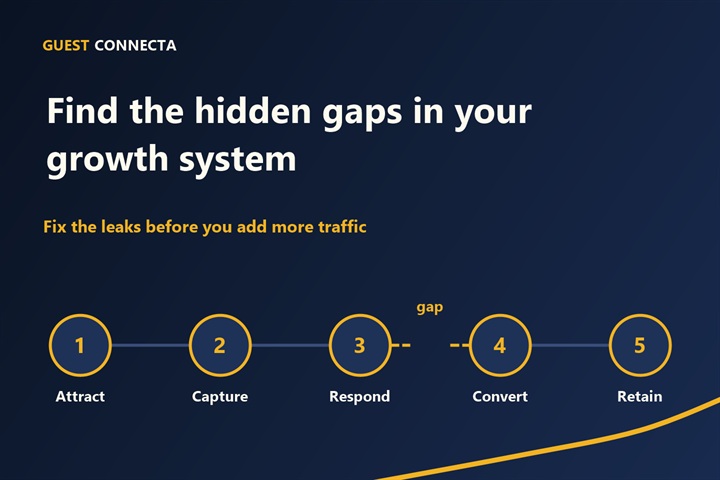
It helps to treat the route from a promising enquiry to a confirmed customer as five stages, because each one loses customers in a different way. The table shows what should happen at each stage and a quick check you can run on your own business.
| Stage | What should happen | A common leak | Quick check |
|---|---|---|---|
| 1. Qualification | You understand the need, the timing and who decides | You quote without knowing what the customer really wants | Do you ask the same few questions every time? |
| 2. The quote | The customer receives a clear, easy-to-accept offer | Slow, vague or hard-to-read quotes | Could a stranger understand it in one minute? |
| 3. After the quote | You follow up on a plan, not on a whim | One email, then silence | When did you last chase a quote older than a week? |
| 4. The decision | Concerns are heard and answered | The customer is left to resolve doubts alone | Do you know why your last three lost quotes were lost? |
| 5. The handover | A yes leads straight to a clear next step | Acceptance, then a silent gap before delivery | What does a new customer hear in the first 24 hours? |
Stage 1: qualify before you quote
A quote written without enough information tends to be wrong, vague or too late, and any of those can cause silence. A few well-chosen questions before you quote also show the customer you are listening. They can be asked in a call, a message or a short form. The questions below suit most service businesses; adapt them to yours.
- What are you trying to achieve, in your own words?
- When do you need this done, and is that date fixed?
- Who else is involved in the decision?
- Have you used a similar service before, and what would you change?
- Is there a budget range you are working within?
The aim is not to interrogate the customer. It is to make the quote fit the real need, and to learn early whether the timing or the decision-maker will be an obstacle.
Stage 2: make the quote easy to say yes to
A good quote reduces effort. A customer who has to work out what they are being offered will often postpone the decision, and a postponed decision is easy to forget. A simple structure helps:
- Their need, restated. One or two sentences in the customer’s own words, so they know you understood.
- What is included (and, where it helps, what is not).
- The price, with anything that could change it explained.
- How long it will take and when you could start.
- The next step. One clear action: reply “yes”, pay a deposit, or book a call.
Speed matters too, but accuracy matters more. Telling the customer when to expect the quote, and then sending it on that day, is better than a rushed quote that needs correcting. Our guide on how quickly to respond to an enquiry covers how to set those expectations.
Stage 3: follow up after the quote without nagging
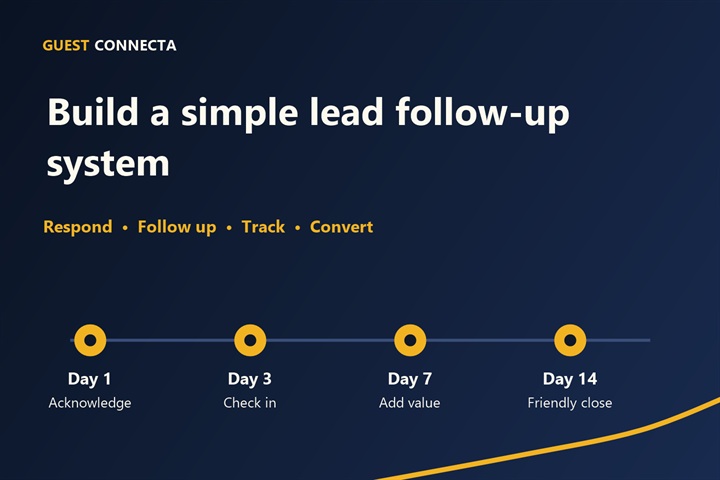
This is the stage most businesses under-serve. The aim of a follow-up is not to push. It is to make it easy for the customer to respond, and to show you are still interested. A plain structure for the first two weeks might look like this, as an example to adapt:
- Same day: confirm the quote was sent and ask them to tell you if anything is unclear.
- A few days later: a short check-in that adds something useful, such as an answer to a question customers often ask, or a relevant example.
- About a week later: ask whether the timing has changed and whether they need anything else to decide.
- A final message: a polite close-the-loop note that says you will not chase again, and leaves the door open.
The exact timing depends on your business and on how fast your customers usually decide, so treat these gaps as a starting point and adjust them as you learn. A simple message might read: “Hi [name], I wanted to check that the quote for [project] arrived and made sense. If any part is unclear, or you would like to change something, tell me and I will update it.”
For a broader sequence that covers the weeks after any enquiry, see what should happen after someone enquires.
Stage 4: help the customer decide
Many quotes stall because the customer has a concern that never gets raised. You cannot answer a question you have not heard, so invite it. Ask something like: “Is there anything that would make this an easier decision?” The common concerns are predictable:
- Price: explain what the price covers, or offer a smaller first step, rather than discounting by reflex.
- Timing: ask what date would suit them and whether you can plan around it.
- Trust: explain how the work is done and what happens if something goes wrong. Only offer proof you genuinely have.
- Comparison: be clear about what makes your offer different, without criticising others.
- Approval: ask who needs to approve it and whether a short summary would help them.
Stage 5: do not lose the customer after a yes
A customer who says yes can still be lost. If acceptance is followed by silence while you get organised, doubt creeps in. A good handover confirms what was agreed, says what happens next and when, names who the customer will deal with, and tells them what you need from them. This is also the moment to record the sale, so that the whole journey can be measured later.
A hypothetical example
The numbers below are made up to show the method. They are not from a real business and are not an industry average.
Imagine a small business that sends 20 quotes in a month and wins 6. The owner assumes the rest said no. When she goes back through the other 14, she finds that 5 never replied after the quote, 4 said they needed more time, 3 had a question that was never answered and 2 chose someone else. Only two of the fourteen were clear losses. The other twelve point to gaps at stage 3 and stage 4: no planned follow-up and no invitation to raise concerns. If a better follow-up recovered even one or two of them, the value would be that customer’s worth to her business, with no extra advertising spend. Whether it would work in practice depends on the business, which is why it is worth counting your own.
How to find where your own customers drop out
You do not need software to start. Keep a simple quote log with one row per quote and these columns:
- date sent and customer name;
- value of the quote;
- dates of each follow-up;
- outcome: won, lost, or still open;
- if lost, the reason, if you know it.
After a month, sort the lost and open quotes into four groups: never replied, asked a question that was not answered, needed more time, and chose someone else. The largest group tells you which stage to fix first. If you do not know why they were lost, that is itself a finding, and the fix is to start asking.
What to keep personal and what to systemise
The parts of this process that repeat, such as the quote reminder, the follow-up schedule and the confirmation after a yes, are good candidates for a simple system. The conversations that need judgement, such as understanding a concern or adjusting an offer, should stay with a person. Our guide to what a business growth system is explains how process, people and tools fit together.
Where to go from here
Start with one step this week: begin the quote log, and put a follow-up date against every open quote. If you would like ready-made tools, the Business Growth Toolkit includes editable checklists, templates and proposals you can adapt to your own process. If you would rather have a follow-up system built for you, see the Business Growth Automation System packages. For the broader picture, read our guide to lead and enquiry conversion.
Frequently asked questions
How long should I wait before following up on a quote?
A short confirmation the same day is reasonable, followed by a check-in after a few days. The right gap depends on how long your customers normally take to decide, so look at how long your won quotes took and use that as a guide.
How many times should I follow up?
Enough to be helpful, but not so many that it feels like pressure. A plan of three or four contacts with a clear end, each adding something useful, is a reasonable starting point to adapt.
Should I lower my price if they go quiet?
Not as a first response. Silence is more often about clarity, timing or trust than price. Ask what would make the decision easier before changing the offer.
Keep reading
- Lead and enquiry conversion: a practical guide
- Where small businesses lose money in the customer journey
- What should happen after someone enquires?
- How to build a simple lead follow-up system
Part of our guide series: Lead and enquiry conversion: a practical guide.